Site information
Traffic Overheating Emergency: Steps to Cool Your Engine Down
Essential Info: Blast your cabin heater at full power, safely exit traffic when you can, shut down the engine, and allow 30 minutes cooling time before inspecting coolant levels. Don’t attempt to open the radiator cap while hot. Seek professional assistance if coolant is depleted or overheating continues after cooldown.
Immediate Actions to Take
Crank your cabin heater to maximum temperature and highest fan setting. This redirects engine heat into the passenger compartment.
Switch off air conditioning systems if currently operating. Climate control adds strain to your cooling components.
Navigate to safety when traffic permits. Activate emergency flashers and locate the roadside, a parking area, or secure location.
Shut down the motor completely after reaching safety. Avoid letting the engine run or revving it up.
Lift the hood without touching components. Allow airflow around the engine compartment for cooling.
Allow minimum 30-minute cooling period before any inspection. Radiator components and hoses remain extremely hot and dangerous.
Inspect the coolant reservoir level (clear plastic container beside radiator). Observe the low and high marking indicators.
Fill the overflow reservoir exclusively if fluid appears insufficient. Avoid radiator cap removal while engine remains warm.
Search for visible fluid leaks beneath your vehicle. Bright green, orange, or pink spots suggest coolant loss.
Restart and watch temperature readings closely. Should the gauge rise toward danger zone again, stop immediately and contact roadside service.
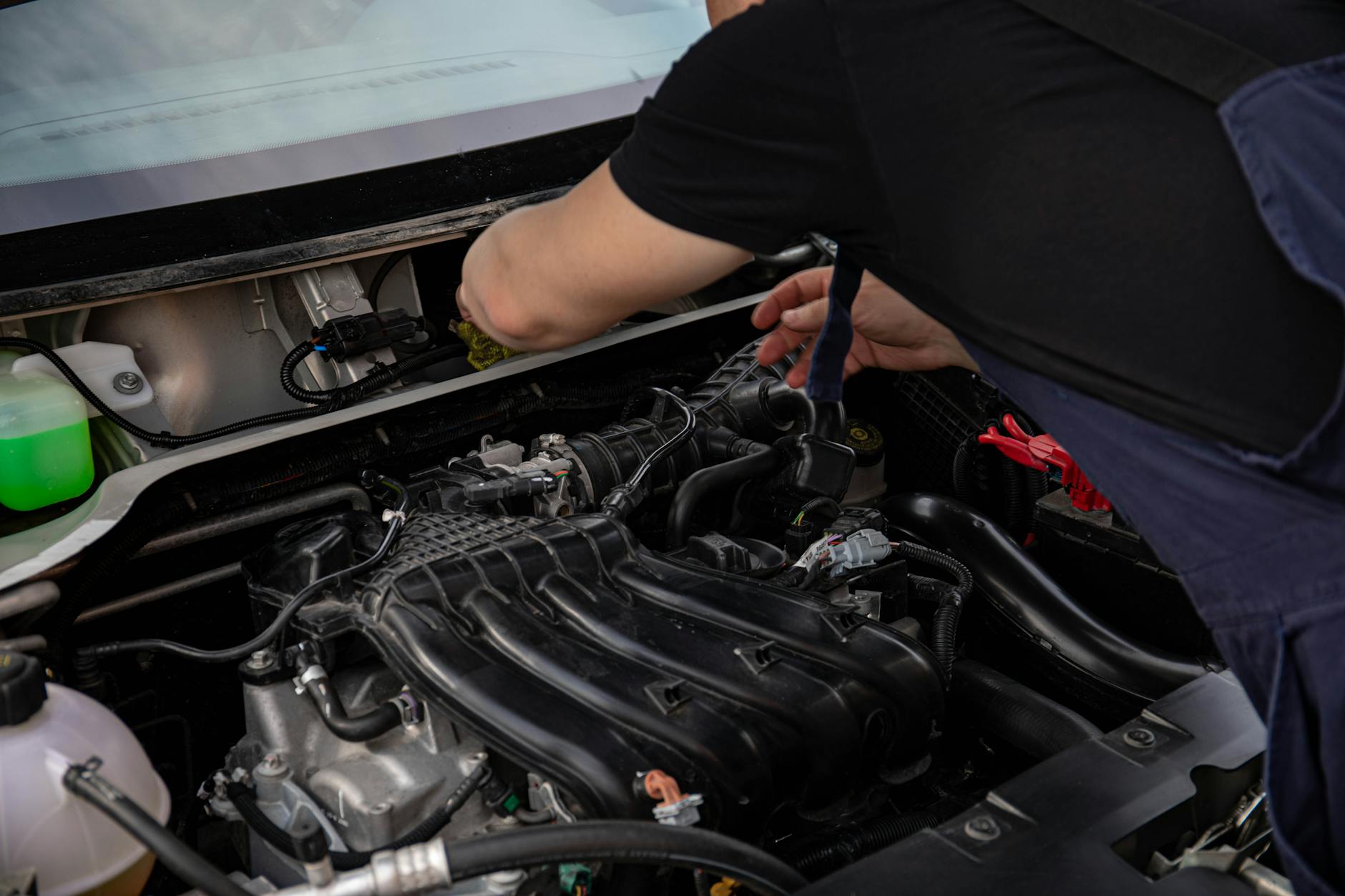 Photo: Pexels
Repair Cost Expectations
- Towing service: $100-200 for local transport
- Thermostat replacement: $150-300
- Water pump replacement: $400-800
- Radiator repair/replacement: $300-1,200
- Head gasket repair: $1,500-3,000
 Photo: Pexels
Safety Precautions
Avoid radiator cap removal during high engine temperatures. Scalding pressurized coolant poses serious burn risks. When steam emerges from the engine bay, maintain distance from the vehicle’s front section. Lower windows while using the heater method during warm weather to prevent cabin overheating. Should temperature readings consistently reach critical levels, discontinue driving and arrange professional assistance immediately.
For the complete guide on this topic, visit Tow With The Flow — real answers when your car breaks down.